
Home » Tile & Grout Cleaning » Tile Cleaning Methods
Tile Cleaning Methods For Austin Homes: Best Way to Clean Tile Floors by Type
Search “how to clean tile floors” and the steam mop will probably pop up along with several other tile cleaning methods. While it may seem like any type of cleaning process will help, in reality using the wrong tile cleaning method can be harmful.
Which Cleaning Method Is Right For Your Type of Tile?
A cleaning approach that leaves glazed porcelain looking factory-new can permanently etch a travertine floor in the same house. Most tile that gets ruined is not ruined by neglect. It is ruined by the wrong cleaning method that’s used too many times or with too much effort.
As we always say, the cleaning method has to match the flooring material. This page walks through the tile cleaning methods knowledgeable professionals use for each type of tile.
Want to skip the reading and get right to professional tile cleaning? Our tile and grout cleaning and sealing service covers the whole process from start to finish.
The Five Methods Used to Clean Tile Floors
Almost every professional tile cleaning job is some combination of these methods. Most floors need two or three different approaches to provide a thorough deep cleaning.
Hot Water Extraction (Truck-Mounted)
What it isHeated water delivered under pressure through an enclosed spinner tool that rinses and vacuums in the same pass.
How it worksThis is the workhorse method for most tile: the heat and pressure break soil loose, and the vacuum recovery pulls the dirty water off the floor instead of leaving it to dry back into the grout.
Added benefitThe tool contains the spray, so there is very little overspray on baseboards and walls.
Portable High-Pressure Extraction
What it isA self-contained machine that delivers heated water under pressure.
How it worksIt does the same work as a truck-mounted extraction machine but can be carried inside.
Added benefitIf your floor is on the sixteenth story of a downtown condo, a truck-mounted hose is not reaching it, and a portable unit with real vacuum recovery is the difference between a proper clean and a mopping.
Mechanical Agitation
What it isRotary brushes for the field of the tile, hand brushing for grout lines, long-bristle brushes for pitted and tumbled surfaces.
How it worksAgitation with brushes is a preparation step, not a standalone method. It works the cleaning solution into the surface so extraction has something to remove.
Added benefitOn textured or uneven tile, this is often the step that gets the result.
Vapor Steam Cleaning
What it isVery hot, very low-moisture steam applied at the surface.
How it worksIt sanitizes well and it loosens soil. What it does not do is remove anything. Without extraction, the soil you loosened settles back down, and on grout it settles into the most absorbent part of the floor.
Added benefitIt’s useful as a targeted tool for tough spots.
Chemical-Led Approaches
What it isEither an alkaline pre-treatment, acidic descaler or stripper that is applied to the flooring to remove buildup.
How it worksAn alkaline pre-treatment breaks down grease and oils. An acidic descaler dissolves mineral and hard water deposits. A stripper dissolves old topical coatings such as acrylic wax.
Special noteUsing the wrong one of these three is when most avoidable damage happens. Always read up on cleaners that damage tile and grout before you buy anything off a shelf.
Steam Loosens Soil. Extraction Removes It.
Both methods use heat, so they get talked about as if they were interchangeable. They are not. The difference is whether anything carries the soil off the floor.
Vapor Steam
Hot Water Extraction
Why the Cleaning Method Has to Match the Tile Type
There are three properties that determine what a tile floor can safely take during the cleaning process:
- Porosity
How much the material absorbs. Glazed porcelain absorbs almost nothing. Saltillo absorbs like a
sponge. Porosity determines:
- How long a solution can dwell
- How much moisture is safe
- Whether the floor needs sealing afterward
- Surface finish Polished, honed, tumbled or textured finishes are different. Polished surfaces show every scratch and swirl, so abrasives are off the table. Tumbled and textured surfaces hide soil in their low points, so they need bristles that reach in rather than pads that skim across the top.
- Chemical sensitivity This is the one that causes permanent damage. Calcium-based stone reacts to acid on contact. The reaction is not a stain sitting on the surface. It is the surface itself dissolving, and no amount of cleaning reverses it.
Porosity
Surface Finish
Chemical Sensitivity
Get one of these three wrong and the outcomes are etching, hazing, scratched glaze, delaminated stone or old wax smeared down into the grout lines where it will hold dirt permanently.
Not Sure What Your Floor Is Made Of?
Identifying the material is the first thing we do — and it’s part of the free estimate.
The Right Cleaning Method For Each Tile Type
| Tile type | Best method | Avoid | Why |
|---|---|---|---|
| Glazed ceramic | Alkaline pre-treat, agitation, hot water extraction | Abrasive pads, strong acids | Glaze is tough, but acid attacks the cement grout even when the tile survives |
| Glazed porcelain | Hot water extraction with a spinner tool | Abrasives on polished finishes | The densest common tile, it tolerates heat and pressure well |
| Unglazed porcelain | Heavier agitation, extraction, then seal | Skipping the seal | The texture that grips soil also grips it again next month without protection |
| Quarry tile | Alkaline degreaser, rotary agitation, extraction | pH-neutral cleaner alone | Grease-loaded commercial floors need degreasing chemistry, not just hot water |
| Saltillo / Mexican terracotta | Strip the old coating first, then clean, then refinish | Extraction over intact wax | Cleaning a waxed Saltillo just produces cloudy wax |
| Travertine & limestone | pH-neutral only, reduced pressure, long-bristle brushes | Any acid, steam mops | Calcium carbonate etches on contact with acid |
| Marble | pH-neutral cleaning; honing if already etched | Acid, abrasive pads | Etching is physical damage, not soil — cleaning will not lift it |
| Slate | Clean, strip old coatings, reseal | Aggressive scrubbing on flaking slate | Slate delaminates when pushed; sealing restores the color depth |
| Glass mosaic | Low pressure, thorough streak-free rinse | Abrasives, letting hard water air-dry | Every mineral spot and every scratch shows |
| Cement / encaustic | pH-neutral, short moisture dwell, reseal | Acid, steam | Unglazed and acid-sensitive, with the pattern in the tile body |
Travertine and limestone are everywhere in the Austin metro, and they are the least forgiving surfaces on the list. Tumbled travertine in particular needs long-bristled brushes worked into the pitting and the shallow grout lines, with heat and pressure dialed down and the floor dried thoroughly before any sealer goes on. Sealing a stone floor that is still holding moisture traps that moisture underneath.
Travertine Cleaning → Limestone Honing → Slate Cleaning →
Quarry tile is a commercial problem. Restaurant kitchens, prep areas and back-of-house floors accumulate a grease film that pH-neutral cleaners will not touch. Those floors need alkaline degreasing and mechanical agitation before extraction does any good, which is why we follow that process when providing commercial tile and grout cleaning.
Grout Is Its Own Material That Needs Special Attention
Whatever the tile is, the grout between each piece is a separate consideration when you’re cleaning. Why? Because it’s made of a completely different material.
Cementitious grout is porous
It absorbs everything that tile shrugs off, which is why grout lines darken years before the tile looks tired. It also means the grout, not the tile, often sets the chemistry limit for the whole floor. Acid that a glazed ceramic tile would survive will weaken the cement grout around it.
Epoxy grout does not absorb
Epoxy grout has the opposite problem. Grime doesn’t sink in, but it holds film on the surface and can haze.
When cleaning takes grout as far as it will go and the color still looks blotchy or uneven, the answer is not more cleaning. It’s grout color sealing, which resets the color uniformly and seals it at the same time.
How Austin’s Hard Water Gets Factored Into the Tile Cleaning Decision
Central Texas water is hard. And not just a little hard. It comes to us through limestone country, and it carries a high mineral content to prove it.
The result is a mineral film that builds on tile surfaces, most visibly in showers and around water lines. It reads as dinginess or a white haze, and no amount of ordinary cleaning removes it, because it is not soil. It’s scale buildup.
How to Clean Up Hard Water Residue
Glazed ceramic, porcelain, glass
TreatmentControlled acidic descaler
✓ Deposit dissolves, glaze unaffected
The glaze is not calcium based, so there is nothing for the acid to attack.
Travertine, limestone, marble
TreatmentpH-neutral cleaner, non-scratch pads
✕ Acid would etch it permanently
Calcium carbonate dissolves on contact. No later cleaning reverses it.
Using the wrong cleaning method is the single most common way a well-intentioned DIY job turns into a professional restoration project. If the haze in a shower is on a natural material it requires stone shower cleaning and sealing.
Where DIY Methods Can Help or Hurt
Not every floor needs a professional cleaning every time, but at the same time, property owners have to be careful about what cleaning products they use and how they use them.
- Steam mops sanitize effectively and are perfectly reasonable for routine maintenance on sealed, glazed tile. They are not deep cleaning, and they should not be used on stone.
- Rental extraction machines use the right principle but rarely have the heat, the pressure or the vacuum recovery to finish the job. The common outcome is a floor that looks good wet and looks worse a week later because the rinse water was left behind to dry back into the grout with the soil still in it.
- Mop and bucket partially cleans. Each pass moves dirty water across the floor and deposits it into the grout lines and into any texture on the tile. Over years that becomes a layer of built-up residue that is genuinely difficult to remove.
How We Remove Years of Built-Up Mop Residue → Stone & Tile Care Guide →
Get a Professional Recommendation For Cleaning Your Tile Type — For Free
Most people aren’t certain whether their kitchen floor is porcelain or ceramic. Or whether that entryway is travertine or a tile made to look like it. But don’t worry — identifying what type of tile you have is part of our free estimate.
We’ll tell you what you have, the best tile cleaning method and what it will cost · (512) 632-1621
Frequently Asked Questions About Tile Cleaning Methods
Is steam cleaning safe for tile floors?
On sealed, glazed ceramic and porcelain, steam is safe for maintenance cleaning. It is not safe for natural stone tile, and on any tile it sanitizes without removing soil since there is no extraction involved. Loosened dirt settles back into the grout.
Can you steam clean natural stone tile?
We do not recommend using a steam cleaning method on natural stone. Heat and moisture can drive into the stone, and steam does nothing for the etching and mineral deposits that are usually the real issue on stone floors. Stone needs pH-neutral cleaning at controlled pressure, followed by stone sealing.
What is the difference between steam cleaning and hot water extraction?
The extraction part is the primary difference. Both use heat, but hot water extraction vacuums the water and the suspended soil off the floor in the same pass. Steam leaves everything where it fell.
Does shower tile need a different method than floor tile?
Usually, yes. Shower tile carries a stack of three problems: soap scum over mineral scale over mildew. That has to be treated in sequence rather than all at once. Solutions run down vertical surfaces, which also affects cleaning.
Do I need to seal after cleaning?
Cementitious grout, yes. Porous tile such as Saltillo, unglazed porcelain and most natural stone also benefits from sealing. Glazed ceramic and glazed porcelain do not need sealing themselves, though the grout around them does.
Let’s Talk About Results
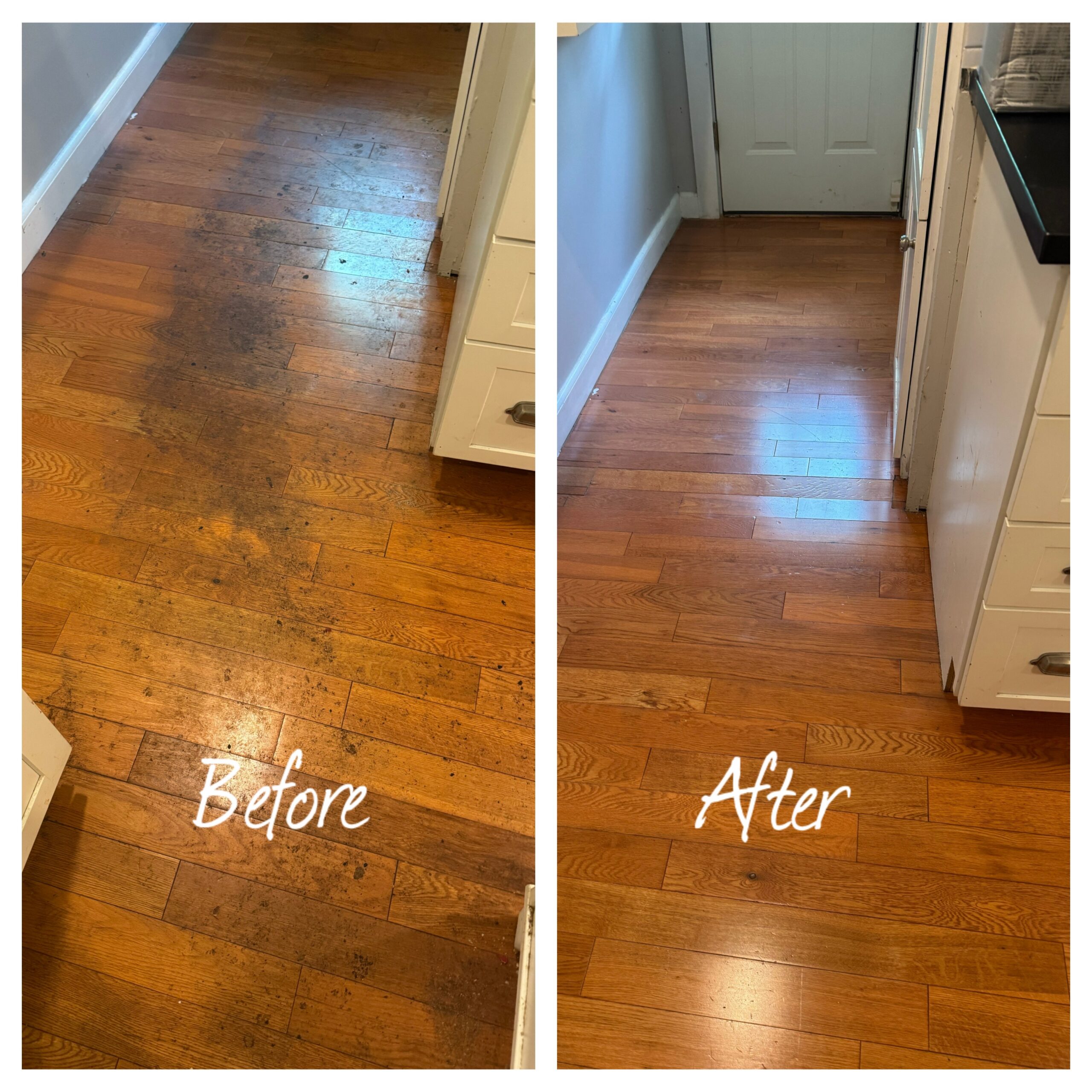
Wood Floor Deep Cleaning in Austin, TX – Years of Built-Up Dirt Removed
Wood floors looked dark and dirty from years of residue buildup. This Austin homeowner contacted…
Read More →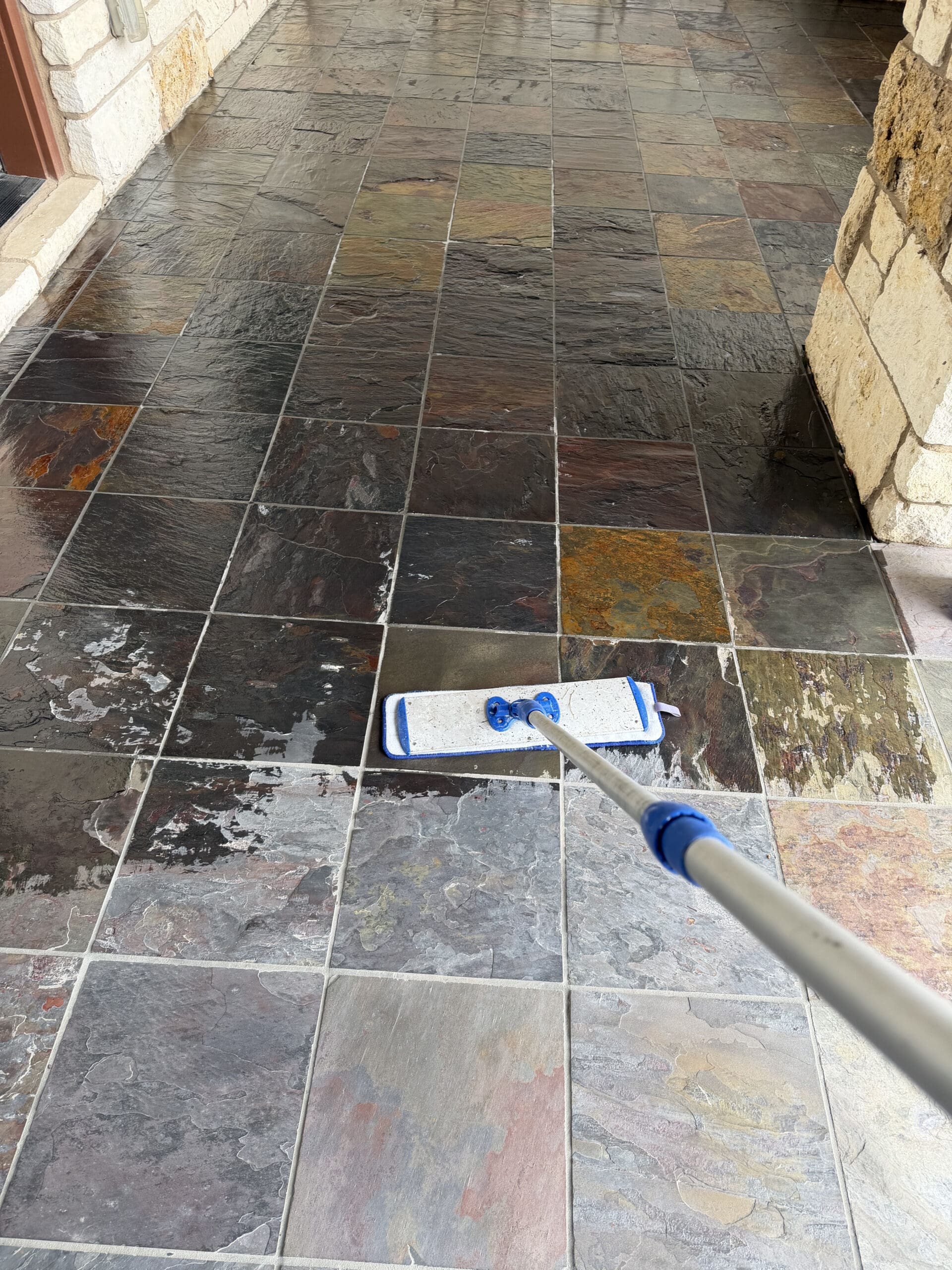
Exterior Slate Tile Cleaning and Sealing in Austin, TX
Project overview: restoring washed-out exterior slate tile. This case study highlights a recent…
Read More →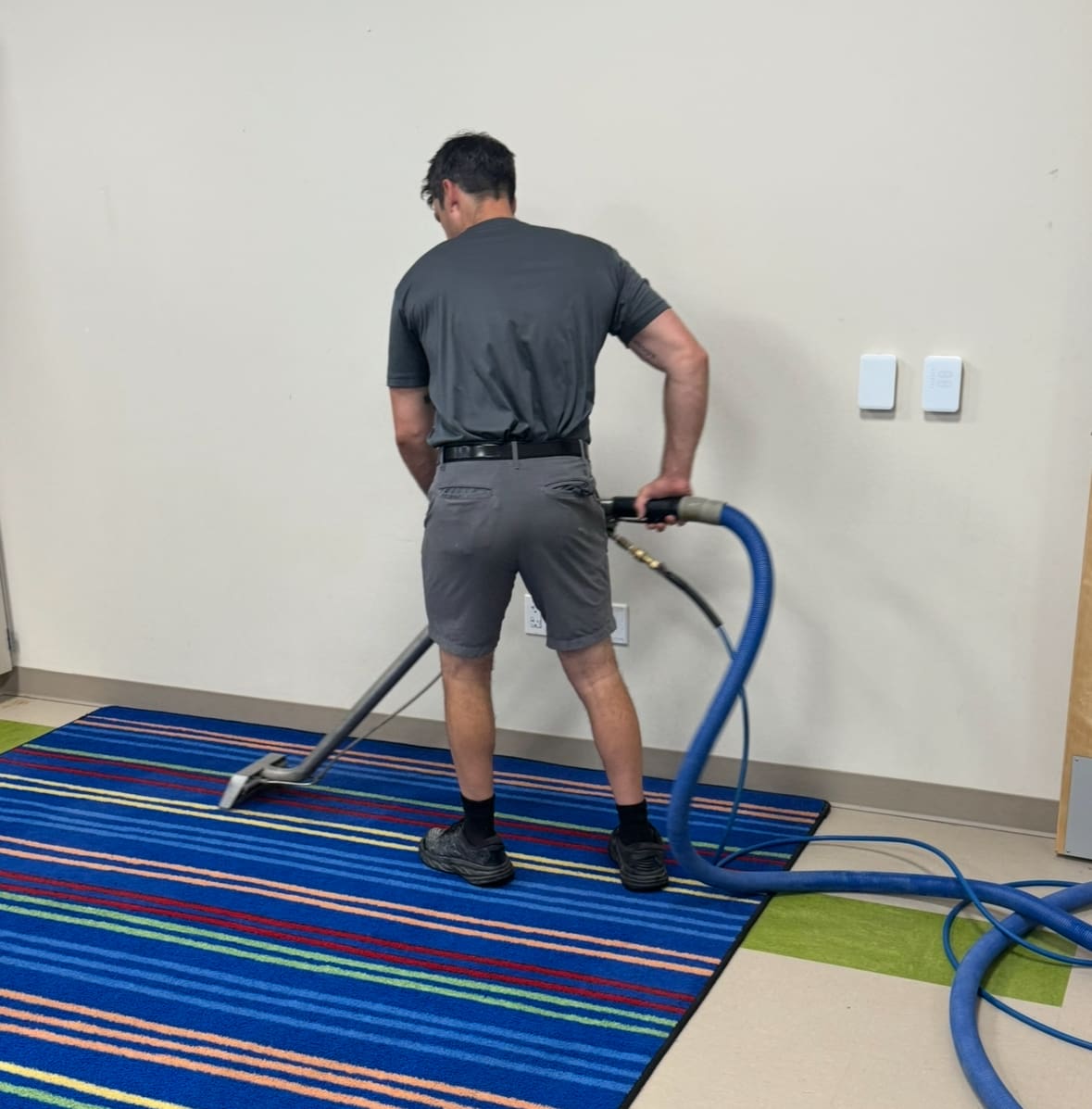
How Our Commercial Carpet Cleaning Austin Services Keep Classrooms Clean and Healthy
Helping Doss Elementary School stay fresh and clean. At Santa Fe Floor Care, we believe that…
Read More →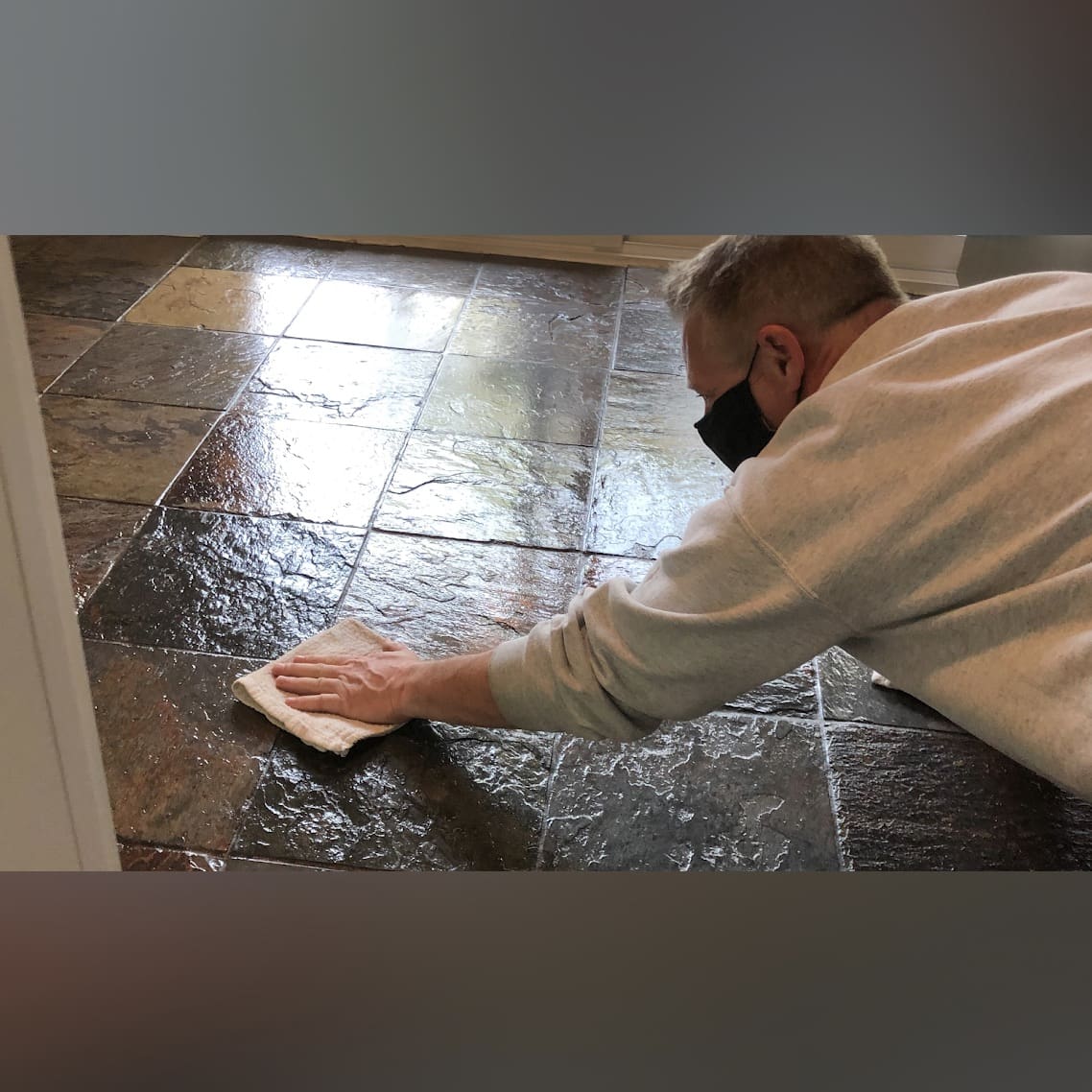
Slate Floor Cleaning & Sealing in Austin, TX
Homeowners across Austin and Central Texas trust Santa Fe Floor Care of Austin for professional…
Read More →