A chalky white film creeping across grout lines is a different problem than the gray, dingy look most homeowners associate with dirty floors — and it doesn’t respond to the same fixes. If mopping and scrubbing aren’t touching it, the culprit is usually mineral buildup, not soil.
This shows up constantly in Austin homes because of hard water stains on tile and grout, a direct result of the mineral content in Central Texas water supplies. Every time water evaporates on a tiled surface — around sinks, tub surrounds, entryways after wet shoes, or shower floors — it can leave behind dissolved minerals that build into a visible haze over time.
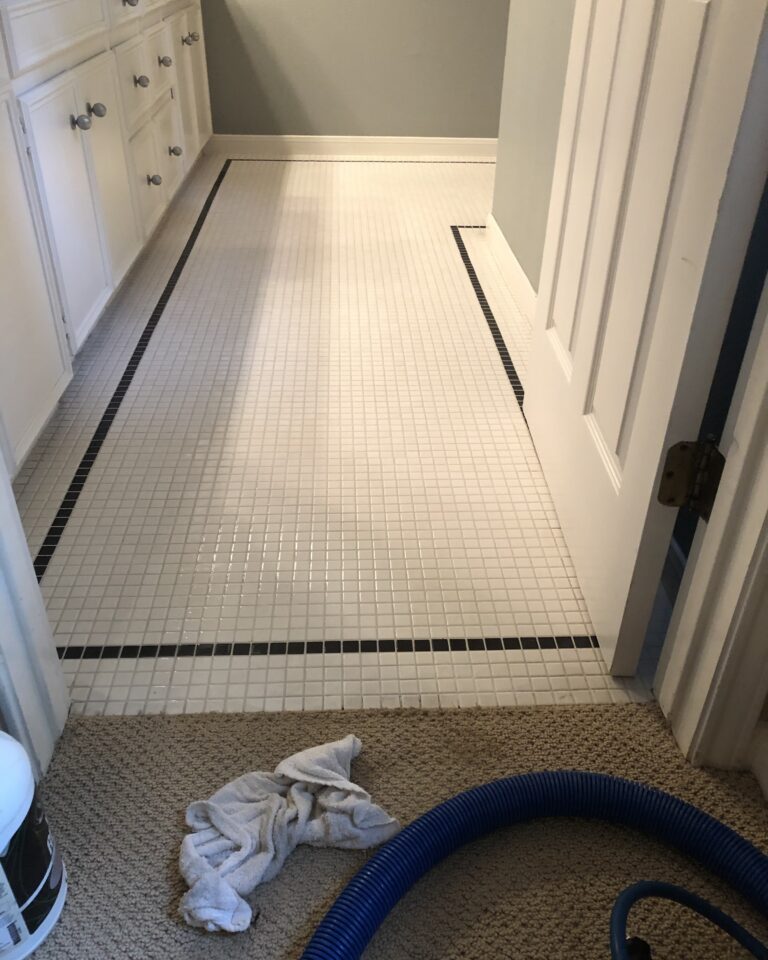
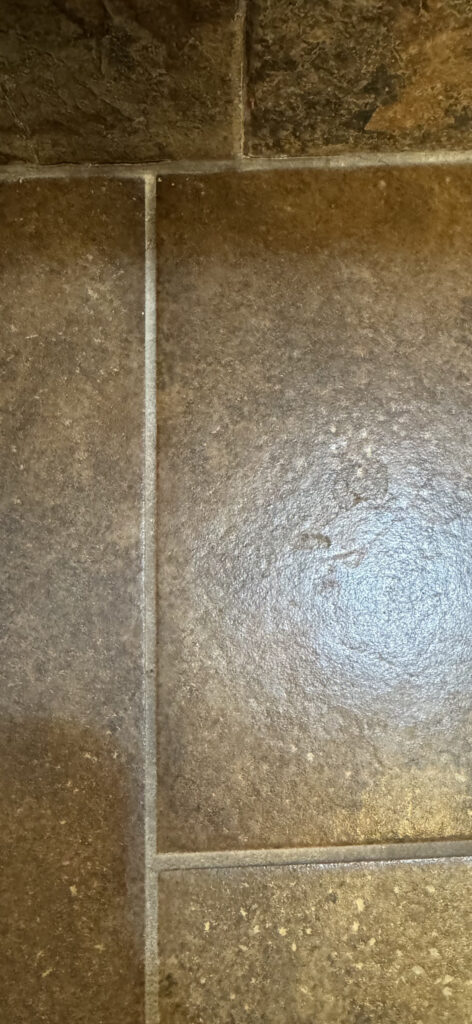
[Image: real before/after photo of hard water staining or efflorescence on grout — alt text: “hard water stains on grout Austin TX before and after cleaning” — PLACEHOLDER: insert real job photo]
What’s the Difference Between Hard Water Staining and Efflorescence?
The two often get lumped together because they look similar — a whitish, powdery, or crusty residue on grout — but they come from different sources.
Hard water staining comes from minerals in tap water (mostly calcium and magnesium) left behind as water evaporates on the surface. It’s most common around sinks, showers, and any spot where water regularly sits and dries.
Efflorescence is a different mechanism entirely. According to the Tile Council of North America, efflorescence forms when moisture migrates up through the grout or the substrate beneath it, carrying dissolved salts to the surface as it evaporates — and the source of that ongoing moisture is often the hardest part of the problem to identify. TCNA notes that efflorescence “can only reappear if moisture is entering the system,” which is why treating the surface without addressing the moisture source often means the haze just comes back.
Why This Is Especially Common in Austin
Central Texas water is known for its mineral content, and homes across Austin, Round Rock, Cedar Park, Georgetown, Lakeway, Bee Cave, and West Lake Hills see the effects on tile and grout regularly — particularly in kitchens, bathrooms, and entryways where water contact is frequent.
Homes with slab foundations can also see efflorescence show up in grout near exterior doors or ground-level bathrooms, especially after heavy rain, since moisture moving through or under a slab can carry mineral salts up into the grout from underneath rather than from surface water at all.
Can You Remove Hard Water Stains and Efflorescence Yourself?
Sometimes, but with real limits. TCNA’s guidance is direct on this point: acids are generally the most effective way to dissolve mineral deposits, but grout manufacturers caution against using them casually, since acid also attacks the cement in the grout itself. Used incorrectly, an acidic cleaner can strip color, weaken the grout, or damage surrounding tile — especially natural stone, which reacts to acid very differently than ceramic or porcelain.
This is one of the few grout problems where professional treatment is usually worth it over a DIY attempt, since the same chemistry that removes the stain can also damage the surface if the concentration or dwell time isn’t controlled carefully.
What Professional Treatment Involves
Removing hard water staining or efflorescence starts with correctly diagnosing which one you’re dealing with, since the treatment — and whether an underlying moisture issue needs to be addressed first — depends on it. This is a different mechanism than the everyday soil and residue buildup regular mopping can’t remove, so it calls for a different diagnostic approach and a different treatment. From there, a controlled, professional-grade treatment lifts the mineral deposits without over-exposing the grout or surrounding tile to unnecessary acid contact.
If the grout has also lost its color evenness from the staining, grout color sealing is often the right next step — it restores a uniform appearance and adds a protective barrier that makes future mineral buildup easier to wipe away instead of soaking in.
Preventing Hard Water Buildup Between Cleanings
A few habits slow the buildup between professional visits:
- Wipe down shower tile and grout after use to reduce standing water evaporation
- Use a squeegee on glass shower doors and tiled shower walls
- Address slow leaks or plumbing drips near tile promptly — they’re a common quiet source of ongoing efflorescence
- Avoid vinegar or other acidic DIY cleaners as a routine habit, since repeated acid exposure gradually breaks down grout even when it seems to be “working”
Proof: Real Tile and Grout Results in Austin Homes
(Flagging this rather than forcing a fit: none of the four case study links on file are specifically about hard water staining or efflorescence — they cover general soil buildup and color sealing instead. I’d rather leave this section out until there’s a real before/after photo of a mineral-staining job to point to, than link a project that doesn’t actually match this problem.)
We Are Austin’s Complete Floor & Surface Care for Your Home
Beyond slate, we offer a full range of professional services to keep every surface in your home looking its best — from deep tile and grout cleaning and grout color sealing, to carpet cleaning, upholstery cleaning, and wood floor cleaning. For other natural stone, explore our marble, travertine, limestone, and terrazzo services.
Not Sure If It’s Hard Water, Efflorescence, or Something Else?
Chalky grout can come from more than one source, and treating the wrong one wastes time and risks damaging your floors. Contact Santa Fe Floor Cleaning & Stone Care at (512) 632-1621 or request a free estimate online — we’ll identify the actual cause before recommending a fix.