You mop your tile floors every week. You use name-brand cleaners. You follow what seems like a reasonable routine. Yet somehow, your floors look duller and dirtier with each passing month. The grout lines have darkened from their original color, and there’s a sticky, hazy film that never quite goes away no matter how much you scrub.
Here’s what most homeowners don’t realize: the problem isn’t your tile—it’s years of cleaner residue that has built up layer after layer. Professional tile residue removal services can eliminate years of accumulated buildup that ordinary mopping simply cannot address. This is one of the most common issues we encounter during professional tile cleaning, and the good news is that in most cases, it’s completely reversible.
One of the most common things we hear is, “I mop my floors every week, but they still look dirty.” In many cases, the problem isn’t the tile—it’s years of cleaner residue that has built up layer after layer.
Why Your Tile Floor Gets Dirtier the More You Mop: Understanding why tile looks dirty after mopping
The frustrating question of why tile looks dirty after mopping has a scientific answer rooted in residue formation. When you mop your floors with household cleaners, you’re not just cleaning—you’re potentially adding a thin layer of residue with every pass. Over time, these layers accumulate, creating a film that actually attracts and traps dirt rather than repelling it.
The chemistry behind this problem involves surfactants, polymers, and other compounds found in common household cleaners. Products like Fabuloso, Pine-Sol, and Mop & Glo are effective cleaners when used correctly, but overuse, improper dilution, or failure to rinse can contribute to significant residue buildup on tile floors.
Fabuloso contains anionic and nonionic surfactants along with high concentrations of fragrance compounds. When used without proper dilution—the recommended ratio is typically 1/4 cup per gallon of water—excess surfactants and fragrance oils remain on the surface after water evaporates. These fragrance compounds contain lipophilic molecules that create an oily film, which then attracts and binds airborne particles and foot traffic soil.
Pine-Sol’s formulation centers around pine oil and glycolic acid, giving it an acidic pH of approximately 3-4. While effective at cutting through grease, when used at full strength or inadequately rinsed, the pine oil leaves behind a resinous film. Pine oil, being a natural terpene, oxidizes over time when exposed to air, creating a darker, stickier residue.
Mop & Glo represents a different category entirely—it’s specifically designed to leave a residue in the form of a glossy protective coating. The product contains acrylic copolymers that create a polymer film with each application. After 10-15 applications, this polymer film can reach 50-100 microns thick. The soft polymer surface acts like flypaper for soil particles, and the acrylic polymers yellow with UV exposure and age, creating that dingy appearance homeowners find so frustrating.
The sticky, hazy appearance of mop residue on tile develops gradually over weeks and months of regular cleaning. Every time you mop without thoroughly rinsing, you add another microscopic layer. Dirt particles stick to this residue instead of being removed, and the cycle continues. Most homeowners don’t realize they have mop residue on tile until the buildup becomes visibly noticeable—usually after several months of routine cleaning.
What mop residue on tile Looks Like
Recognizing the symptoms of residue buildup is the first step toward addressing the problem. Homeowners typically notice several telltale signs that indicate their floors are suffering from accumulated cleaner residue rather than just normal dirt.
The tile surface develops a hazy, clouded appearance that dulls the original shine. When you run your hand across the floor, it feels slightly sticky or tacky rather than clean and smooth. High-traffic areas develop brown or gray traffic lanes that seem impossible to remove no matter how much you scrub. The grout lines, which may have started as light gray or beige, gradually darken to brown or black.
Perhaps most frustratingly, the floors never look truly clean, even immediately after mopping. Within hours, they appear dirty again. If you walk across the floor in white socks, they quickly become discolored and grimy. The entire floor has a dull, lifeless appearance that makes the space feel dingy and neglected, even when you’re maintaining a regular cleaning schedule.
These symptoms indicate that you’re dealing with tile floor residue buildup rather than simple dirt accumulation. The residue creates a textured surface at the microscopic level that traps soil particles and prevents effective cleaning with traditional mopping methods.
Why Regular Mopping Doesn’t Fix the Problem
Understanding the limitations of traditional mopping helps explain why the residue problem persists despite your best efforts. The fundamental issue is that mopping moves dirty water around rather than removing contaminants from the floor.
When you mop, you’re essentially spreading a mixture of water, cleaner, and suspended soil across the surface. As you continue mopping, the water in your bucket becomes increasingly contaminated. Most homeowners never rinse thoroughly after cleaning, which means the cleaning solution—along with the dirt it has suspended—simply dries on the floor. The cycle of mopping residue accumulation creates a self-perpetuating problem that worsens with each cleaning.
Think of it this way: imagine trying to clean a dirty window by wiping it with a damp cloth, but never rinsing the cloth or the window. You’d just be moving the dirt around, and eventually, you’d be adding more dirt than you’re removing. That’s essentially what happens with traditional mopping.
The residue builds layer upon layer because there’s no extraction process. Dirt becomes embedded into the residue instead of the tile itself, which is why scrubbing harder doesn’t help. You’re not cleaning the tile—you’re trying to clean the residue layer, which is designed to be sticky and attract particles. Without proper extraction equipment, you simply cannot remove these accumulated layers effectively.
Can professional tile cleaning Remove Years of Residue?
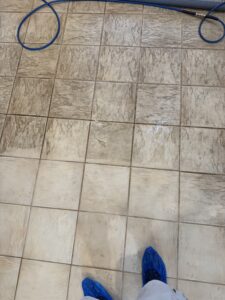
Yes—in many cases, professional tile cleaning can dramatically improve or completely remove years of accumulated residue that ordinary mopping cannot address. The difference between DIY mopping and professional tile cleaning becomes immediately apparent in the results.
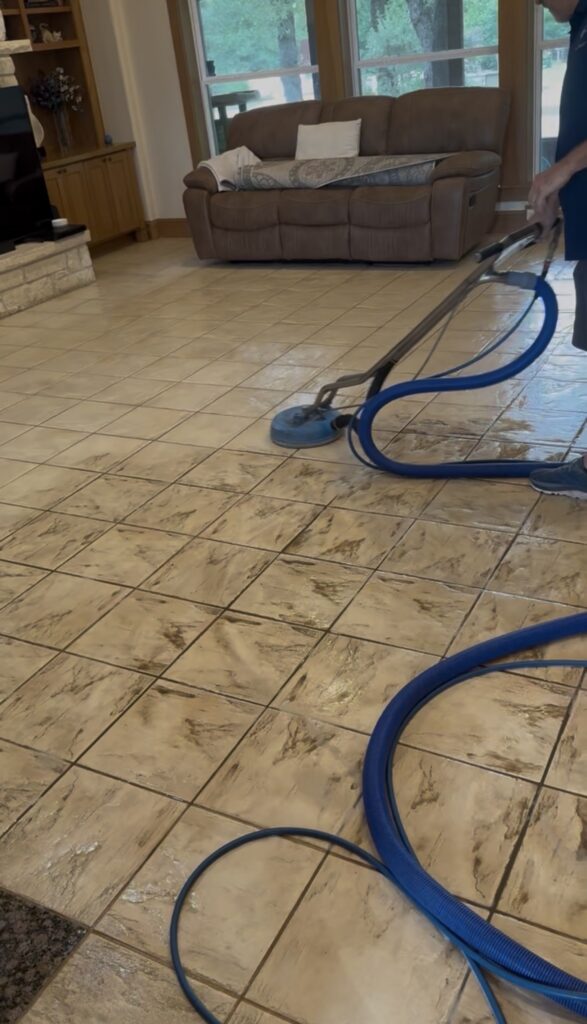
Professional tile residue removal services use specialized equipment and techniques that operate on entirely different principles than household mopping. Instead of spreading dirty water around, professional systems inject cleaning solution, mechanically agitate the surface, and then extract the suspended soil and residues. This process removes contaminants rather than redistributing them.
However, it’s important to set realistic expectations. Some discoloration may be permanent if the tile or grout has been physically damaged or etched by years of improper cleaning. Acidic cleaners can etch the surface of certain tiles and unsealed grout, creating permanent roughness that holds stains. In these cases, the surface condition can be dramatically improved, but it may not return to its original appearance.
That said, most residue buildup can be dramatically improved or completely eliminated. The science behind effective tile residue removal involves understanding surface chemistry and proper cleaning techniques. Professional technicians can assess your specific situation and provide an honest evaluation of what results you can expect.
When homeowners in Austin search for tile residue removal solutions, they’re often surprised to learn that their cleaning routine is the culprit. The transformation can be remarkable—floors that homeowners thought needed replacement often return to a like-new appearance after proper professional cleaning.
Our Professional tile residue removal Process
Professional tile floor cleaning Austin services encounter this residue problem in nearly every residential job. Our systematic approach addresses both the immediate cleaning needs and the underlying chemistry that created the buildup in the first place.
Stone-Safe Pre-Treatment
The process begins with applying a professional-grade cleaning solution specifically formulated for tile and grout. Unlike household cleaners, these solutions are designed to break down residue without leaving their own buildup behind. We use alkaline cleaners with a pH of 10-12 for heavy soil and grease, carefully selected to be safe for your specific tile type.
The pre-treatment solution needs proper dwell time—typically 10-15 minutes—to allow the chemical action to break down the bonds between the residue and the tile surface. This dwell time is critical; it allows the surfactants in the professional cleaner to penetrate the accumulated layers and begin emulsifying the residue. During this phase, the cleaning solution is working at the molecular level to separate years of buildup from your floor.
CRB Agitation
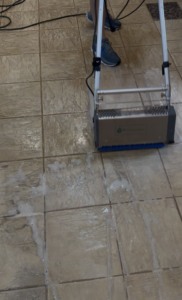
After the pre-treatment has had time to work, we use a Counter Rotating Brush (CRB) machine to mechanically agitate the surface. The CRB is widely used throughout the professional floor cleaning industry because its counter-rotating brushes are highly effective at agitating textured tile surfaces and grout lines, helping loosen years of embedded residue before extraction.
The CRB machine features two cylindrical brushes that rotate in opposite directions at 800-1,000 RPM, creating intense scrubbing action that physically dislodges embedded soil particles from grout pores. The bristles penetrate 1-3mm into grout lines, reaching depths impossible with a mop. The machine applies 25-30 pounds of downward pressure while injecting cleaning solution directly ahead of the brushes.
This counter-rotating action creates several synergistic effects. The opposing brush rotation generates turbulence in the cleaning solution, suspending dislodged soil particles and preventing redeposition. Unlike mopping, which can spread residues, the CRB action breaks up polymer films and surfactant deposits, emulsifying them for extraction. Modern tile cleaning technology has advanced significantly beyond traditional mop-and-bucket methods, and the CRB represents a significant leap in effectiveness.
Hot Water Extraction
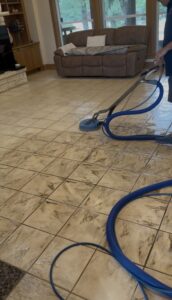
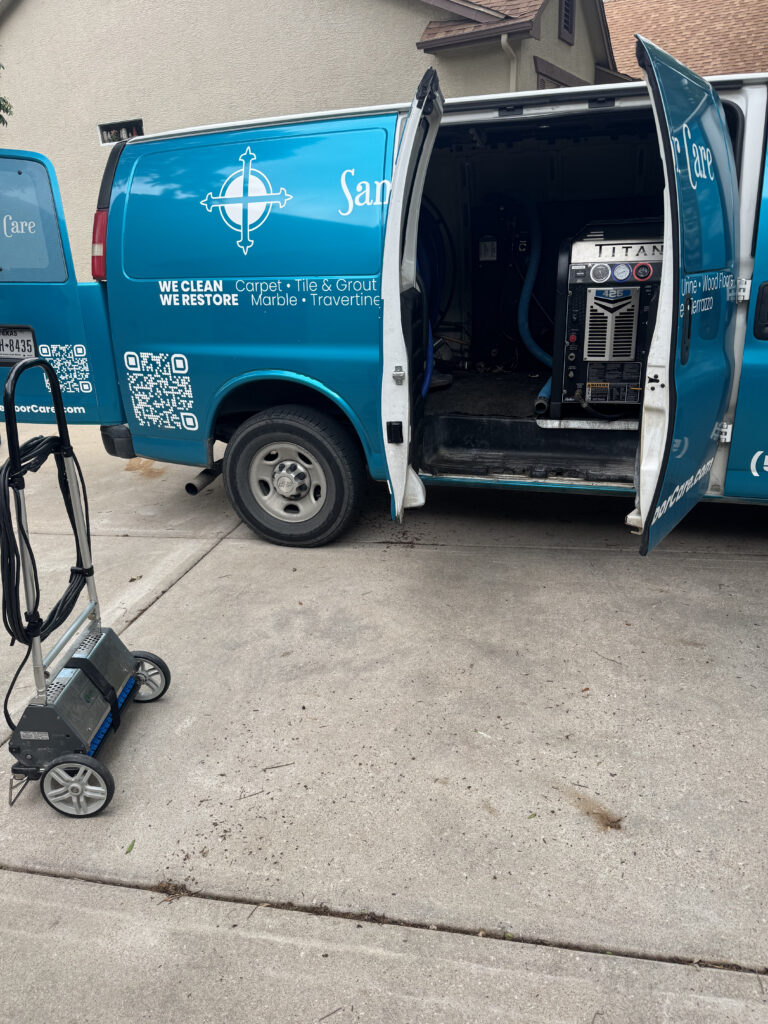
Following CRB agitation, we use truck-mounted hot water extraction to flush away the suspended residue and soil. This is where professional cleaning truly separates itself from household mopping. The equipment used in professional tile cleaning operates at temperatures and pressures impossible to achieve with household tools.
Our truck-mounted system heats water to 180-220°F and delivers it at 500-1,200 PSI pressure. At these temperatures, water molecules move approximately 2.5 times faster than at room temperature, dramatically increasing their ability to dissolve and suspend soil particles. The heat also softens polymer residues—products like Mop & Glo contain acrylic polymers with glass transition temperatures around 100-140°F, meaning they soften and become removable at elevated temperatures.
The extraction process doesn’t simply spread contamination like mopping does. Instead, it removes suspended soil and cleaning solution from the floor entirely. The vacuum system creates 10-15 inches of mercury suction, recovering 90-95% of the water applied. This means the residues, dirt, and cleaning solution are pulled out of the grout pores and off the tile surface, not just moved around.
The difference is dramatic. While mopping might remove 50-70% of surface soil, professional hot water extraction removes 95-98% of contaminants. For grout deep cleaning, mopping reaches only the surface (removing perhaps 10-20% of embedded soil), while extraction cleans 2-3mm deep into the grout structure, removing 85-95% of embedded contamination.
Inspection
After the initial cleaning and extraction, we carefully inspect the floor for any remaining problem areas. Some spots may have particularly heavy buildup or staining that requires additional attention. When necessary, we repeat the cleaning process in these areas, applying additional pre-treatment, agitation, and extraction until we achieve the best possible results.
This inspection phase is critical because it ensures we don’t miss any areas and allows us to address stubborn spots with targeted treatment. We also check the pH of the floor surface to ensure all cleaning residues have been neutralized and removed. The goal is to leave your floor at a neutral pH of 6-8, which prevents future residue attraction and buildup.
grout cleaning Austin: Sealing for Long-Term Protection
Once the floor is thoroughly cleaned and dried, we offer optional grout sealing services. Specialized grout cleaning Austin services focus on the porous cement-based material that absorbs residues most readily. Unsealed grout has a porosity of 15-20%, meaning it readily absorbs liquids, oils, and cleaning product residues.
Applying a penetrating sealer—typically siloxane or silicone-based—reduces this porosity dramatically. The sealer penetrates 1-3mm into the grout, creating a protective barrier that makes future maintenance easier, reduces staining, and helps maintain that clean appearance longer. Regular grout cleaning Austin maintenance helps preserve the original color and prevents permanent discoloration.
The benefits of sealing include easier routine maintenance, reduced staining from spills, and a longer-lasting clean appearance. Sealed grout resists moisture penetration, which also helps prevent mold and mildew growth in humid environments. We typically recommend resealing every 1-3 years depending on traffic levels.
Why We See This Problem So Often in Austin: tile floor cleaning Austin Insights
When you schedule tile floor cleaning Austin experts, they can assess the extent of residue buildup during the initial inspection. The residue problem is particularly common in Austin homes for several interconnected reasons related to our local environment and lifestyle.
Years of routine mopping create the foundation for buildup, but Austin’s specific conditions accelerate the problem. High traffic from active families means more soil is tracked onto floors daily. Pets contribute additional oils and dirt that interact with cleaning residues. Kids mean spills, sticky messes, and frequent cleaning—which paradoxically can worsen the residue situation if not done properly.
Texas dust is a significant factor. Our dry climate and frequent winds mean fine dust particles constantly infiltrate homes. This dust settles on floors and becomes trapped in the sticky residue layer created by improper mopping. The more residue present, the more dust adheres, creating a visible layer of grime that seems to reappear within hours of cleaning.
Hard water is another Austin-area challenge. Our water supply contains high levels of calcium and magnesium minerals. When hard water interacts with cleaning products containing fatty acids or when alkaline cleaners react with these minerals, insoluble compounds form. These calcium and magnesium ions bind with surfactants to create soap scum, which adheres strongly to grout’s porous structure. Over time, this mineral buildup combines with cleaner residues to create a particularly stubborn layer.
The progression of tile floor residue buildup follows a predictable pattern over months and years. In the first few months, the buildup is barely noticeable. By six months, you might notice slight dulling in high-traffic areas. After a year, the grout lines show visible darkening, and the tile has lost its original luster. By two years, the residue layer is substantial enough that cleaning becomes increasingly ineffective, and the floor looks perpetually dirty despite regular maintenance.
The combination of frequent cleaning (adding more residue), high traffic (grinding dirt into the residue), environmental dust, and hard water creates a perfect storm for rapid residue accumulation. This is why professional tile floor cleaning Austin services are not just a luxury—they’re a necessary part of maintaining your home’s appearance and protecting your flooring investment.
How to Prevent tile floor residue buildup in the Future
Learning how to clean tile floors without leaving residue starts with understanding proper product dilution ratios. Preventing tile floor residue buildup requires proper product dilution and thorough rinsing after each cleaning. Following proper tile cleaning tips can minimize residue formation between professional services.
First, use a quality neutral-pH cleaner appropriate for your specific floor type. Neutral cleaners (pH 6-8) are recommended for routine maintenance by both the Institute of Inspection Cleaning and Restoration Certification (IICRC) and the Tile Council of North America (TCNA). These cleaners effectively remove soil without leaving alkaline or acidic residues that can build up over time.
Always follow the manufacturer’s dilution instructions precisely. More cleaner does not mean better cleaning—it means more residue. If the label says 1/4 cup per gallon of water, measure it accurately. Over-concentration is one of the primary causes of residue buildup in residential settings.
Change your mop water frequently—ideally every 200-300 square feet. As your mop water becomes dirty, you’re essentially redepositing soil and residue across your floor rather than cleaning it. Fresh water ensures you’re actually removing contaminants rather than spreading them around.
Avoid applying more cleaner than necessary. A light application is sufficient for routine maintenance. Heavy applications require more rinsing and increase the likelihood of residue remaining on the surface.
Consider performing a clean water rinse after mopping with cleaner. This extra step removes cleaning solution residues before they can dry on the floor. While it adds a few minutes to your cleaning routine, it dramatically reduces long-term buildup.
Finally, schedule professional deep cleaning periodically. Investing in professional tile cleaning twice a year can prevent the residue accumulation that makes floors look perpetually dirty. Even with perfect home maintenance, some buildup is inevitable over time. Professional extraction cleaning removes what routine mopping cannot, resetting your floor to a clean baseline.
Real Results: Removing Years of Mop Residue
The transformation possible through professional cleaning can be dramatic. We recently worked with an Austin homeowner who was convinced their 10-year-old tile floor needed complete replacement. The grout had turned dark brown, the tile had a permanent hazy film, and the floor felt sticky underfoot no matter how much they cleaned.
After our professional pre-treatment to break down the accumulated residue, CRB agitation to mechanically dislodge embedded soil from the grout lines, and truck-mounted hot water extraction at 180°F to flush away years of buildup, the floor returned to a much cleaner, brighter appearance. The grout color lightened by several shades, returning close to its original beige tone. The tile regained its natural shine, and the sticky residue was completely eliminated.
The homeowner was amazed that the floor they thought was permanently damaged was actually just buried under years of cleaner residue. What they had assumed was aging and wear was actually reversible buildup. The transformation saved them thousands of dollars in replacement costs and restored their home’s appearance.
This scenario plays out regularly in our work. Floors that appear hopelessly dirty often respond remarkably well to proper professional cleaning. The key is addressing the root cause—the residue layer—rather than continuing to fight the symptoms with more frequent mopping.
Conclusion
Professional tile residue removal services offer a solution to a problem that frustrates countless homeowners: floors that look dirtier despite regular cleaning. The science behind effective tile residue removal involves understanding surface chemistry and proper cleaning techniques that go far beyond what household mopping can achieve.
If your tile floors in Austin still look dirty after years of faithful mopping, the problem likely isn’t your tile—it’s the accumulated residue from cleaning products. The good news is that this buildup is usually reversible with professional intervention.
Santa Fe Floor Cleaning & Stone Care specializes in removing years of built-up residue and restoring tile and grout to their original appearance. Our IICRC-trained technicians use truck-mounted hot water extraction and professional-grade equipment to achieve results that simply aren’t possible with household cleaning methods.
Don’t replace your tile floors when professional cleaning might restore them to like-new condition. Contact Santa Fe Floor Cleaning & Stone Care today for a professional evaluation. We’ll assess your floor’s condition, explain what results you can realistically expect, and provide a detailed plan for removing years of accumulated residue. Your floors may be in better condition than you think—they just need the right cleaning approach.
Proof: Real Tile & Grout Cleaning Results in Austin Homes
At Santa Fe Floor Care, we don’t just talk about results — we document them. Every project we complete is an opportunity to show exactly what professional tile and grout cleaning can achieve in real Austin homes.
In one recent Tile & Grout Cleaning in Austin High-Rise Condominium, we restored heavily soiled grout lines that standard mopping couldn’t touch. The difference was immediate — years of embedded soil removed, original grout color revealed, and a noticeably cleaner, brighter floor.
We’ve also completed multiple Grout Color Sealing Projects in Austin, TX, where homeowners were dealing with permanently stained or uneven grout. In these cases, cleaning alone wasn’t enough — so we applied a professional color seal to create a uniform appearance while also locking out future stains.
Another great example is our Kitchen Tile & Grout Deep Cleaning in Austin Home, where high-traffic areas had built up grease, dirt, and residue over time. Using professional equipment and proper stone-safe cleaning solutions, we were able to fully flush contaminants out of the grout lines — something mopping simply can’t achieve.
These are not uncommon situations. In fact, most homeowners we work with are surprised at how much dirt is still trapped in their floors even after regular cleaning. That’s because grout is porous, and without professional extraction methods, contaminants remain embedded below the surface.
If you’re dealing with grout that still looks dirty no matter how often you clean it, these real-world results show what’s actually possible with the right process.
We Are Austin’s Complete Floor & Surface Care for Your Home
If you’re looking for more ways to protect and restore your floors, we offer a full range of professional services designed to keep every surface in your home looking its best. From deep tile and grout cleaning and long-lasting grout recoloring services, to advanced carpet cleaning and targeted pet urine treatment, we handle the toughest cleaning challenges with proven methods. We also provide detailed upholstery cleaning and gentle yet effective wood floor cleaning to refresh your entire living space.
For natural stone, our specialized stone restoration services cover everything from travertine cleaning, marble cleaning, and terrazzo services to limestone services and slate services. If your floors have lost their shine, our natural stone honing and polishing process can restore a smooth, like-new finish. Explore each service to learn more about how we can bring your floors back to life.
Looking for a trusted commercial floor cleaning company in Austin? Santa Fe Floor Cleaning & Stone Care provides professional tile & grout, carpet, upholstery, wood, and natural stone cleaning for offices, retail spaces, churches, HOAs, and apartment communities.
Professional Tile & Grout Cleaning in Austin
Whether you’re dealing with dirty grout, stubborn residue, grout haze, sticky tile floors, or simply want your floors looking their best again, professional cleaning can make a dramatic difference. At Santa Fe Floor Cleaning & Stone Care, we specialize in restoring tile and grout using commercial-grade equipment, proven cleaning methods, and years of hands-on experience.
From routine tile and grout cleaning and grout sealing to grout color sealing and specialty restoration services, we’ll recommend the right solution for your specific floor—not a one-size-fits-all approach.
If your tile floors have lost their original appearance, we’d be happy to evaluate them and provide an honest recommendation.
📞 Call Santa Fe Floor Cleaning & Stone Care today at (512) 632-1621 or request your free estimate online. We proudly serve homeowners throughout Austin, Round Rock, Cedar Park, Georgetown, Lakeway, Bee Cave, West Lake Hills, and the surrounding Central Texas communities.