
Your beautiful tile floors are a major investment in your Austin home. But with so many cleaning products on the market, how do you know which ones are safe and effective? Choosing the best cleaner for tile floors depends on your specific tile type and cleaning needs, but making the wrong choice can lead to permanent damage and costly repairs.
Many Austin homeowners unknowingly use products that seem harmless but actually cause long-term damage to their floors. From acidic cleaners that etch natural stone to harsh chemicals that break down grout, the wrong cleaning approach can turn your stunning floors into an expensive problem.
Here are the six types of cleaners most likely to be quietly damaging your floors — and what to use instead.
1. Acidic Cleaners
Vinegar tops the list of products that seem helpful but cause serious damage. Despite being promoted as “natural,” vinegar’s acidity breaks down grout structure at the molecular level. The damage mechanism involves acid etching of porous grout, which creates brittleness, cracking, and pinholes that allow dirt and stains to penetrate deeper into the material.
For natural stone tiles including marble and limestone, acidic cleaners cause etching and pitting that permanently damages the surface. Once this damage occurs, there’s no reversing it.
2. Bleach-Based Products
Bleach seems like it should whiten grout, right? Wrong. While bleach appears to whiten grout initially, it causes permanent discoloration and splotchiness over time. The chemical action weakens grout structure, making it more porous and susceptible to dirt accumulation.
Even worse, bleach strips away protective sealers that keep your grout looking good. This leaves your floors vulnerable to stains and moisture damage.
3. Ammonia-Based Cleaners
Ammonia products strip away protective sealers and cause grout discoloration. Beyond that, ammonia leaves residues that actually attract more dirt. The critical safety concern involves mixing ammonia with bleach, which creates toxic fumes posing serious health risks — never combine the two.
4. Abrasive Scouring Cleaners
Cleaners with visible grit or scouring powders may feel like they’re “working harder,” but that gritty texture physically scratches tile glazes and polished stone finishes. Once a finish is scratched, it loses its sheen permanently and becomes more porous — meaning it collects dirt faster than before you started cleaning.
5. Wax-Based “Shine” Products
Products designed to leave a glossy coating build up in layers with repeated use. Over time, that coating yellows, attracts dust like flypaper, and creates the exact dull, dingy look homeowners are trying to clean away. Removing this buildup typically requires professional stripping — it doesn’t come off with regular mopping.
6. Oil-Based Soaps
Oil soaps are popular for hardwood but are frequently used incorrectly on tile and stone. On these harder, non-porous-to-oil surfaces, the oil doesn’t absorb — it sits on top, leaving a greasy film that dulls the finish and makes floors feel slightly tacky underfoot, similar to residue buildup from other product types.
What Is the Best Cleaner for Tile Floors? Expert Recommendations
The Tile Council of North America provides clear guidance on this question. According to their official recommendations, pH-neutral cleaners specifically designed for tile maintenance should be used instead of harsh chemicals including bleach and ammonia.
Ceramic and Porcelain Tiles
These are the most forgiving tile types and can handle a wider range of cleaning products. For routine cleaning, mix 1-2 tablespoons of mild dish soap per gallon of warm water. This simple solution effectively cleans without harsh chemicals.
Natural Stone Tiles (Marble, Travertine, Limestone)
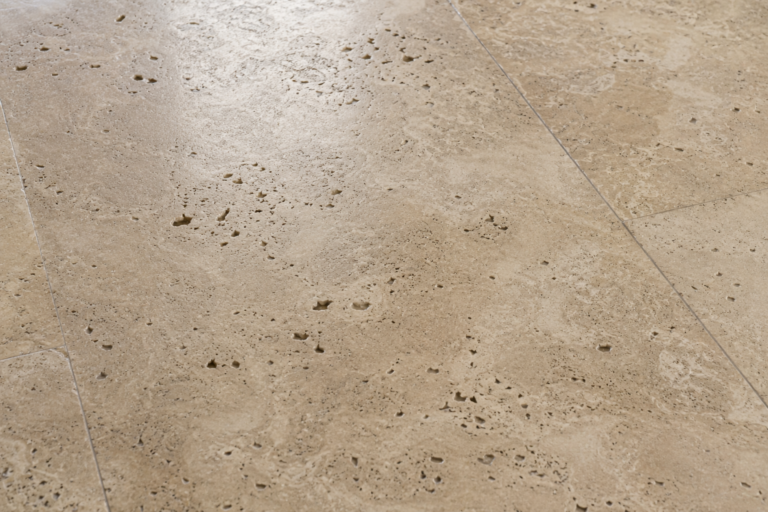
Natural stone requires special care because it’s more porous and sensitive to acids. The best cleaner for floors made of natural stone must be specifically formulated for stone surfaces, maintaining a pH level between 7-8 with no acids that could cause etching.
According to the Tile Council of North America, natural stone surfaces require pH-neutral cleaners to prevent etching and maintain the stone’s natural beauty — acidic cleaners can cause permanent damage that requires professional restoration.
Steam Cleaning Option
Many homeowners find that steam cleaning provides chemical-free cleaning that’s both effective and environmentally friendly. Steam cleaning uses high-temperature water (typically 200°F+) to sanitize and clean without leaving chemical residues. Consumer steam cleaners can’t match professional equipment’s temperature and pressure capabilities.
Specialized Grout Cleaners
For tough grout stains, specialized products work better than household alternatives. These formulations are engineered for grout’s unique porosity and composition, lifting dirt and stains without breaking down the grout structure.
The Professional Difference
Professional cleaning begins with examining tile type and grout condition to determine appropriate cleaning methods and solutions. This assessment phase prevents damage that occurs when using the wrong products or techniques.
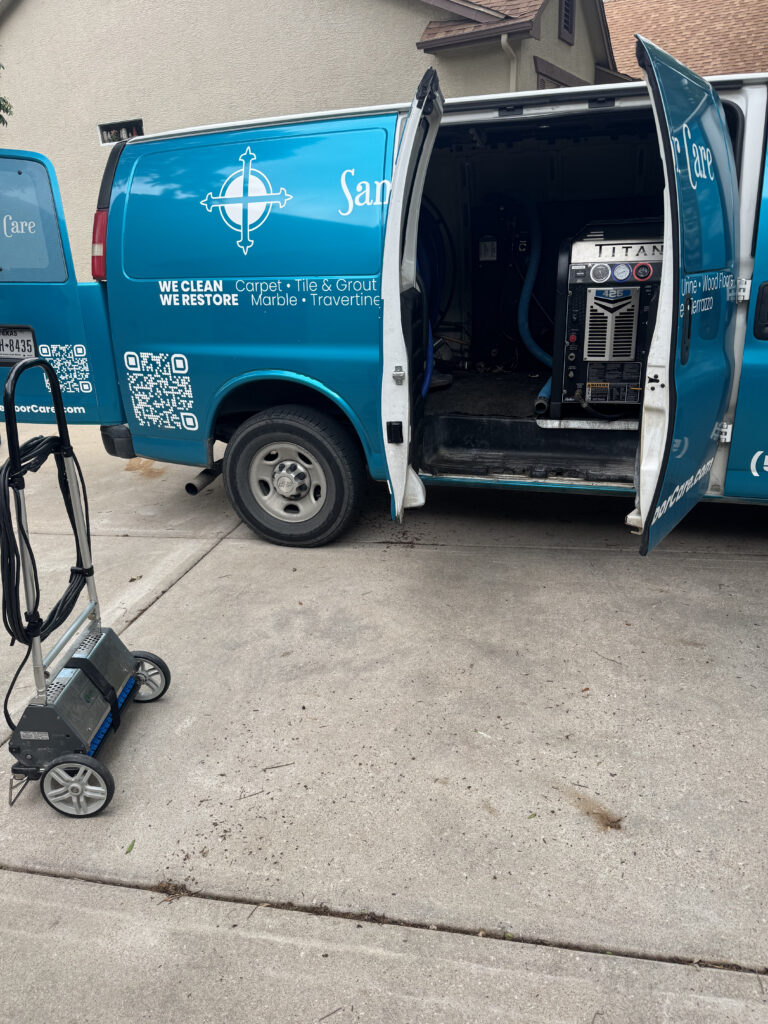
Professional services follow a systematic process: clearing and vacuuming loose debris, applying pre-treatment solutions with specific dwell times, using specialized equipment like rotary machines for agitation impossible to achieve manually, and finishing with hot water extraction to rinse away loosened dirt and cleaning solution — a critical step, since leftover cleaning residue attracts more dirt.
The Institute of Inspection, Cleaning and Restoration Certification (IICRC) sets international standards for cleaning professionals, including a Stone, Masonry, and Ceramic Tile Cleaning Technician certification. When you hire IICRC-certified professionals, you’re getting services that meet internationally recognized benchmarks.
Protecting Your Investment: Sealing and Maintenance
The Tile Council of North America recommends that grout sealer be applied after grout has fully cured — typically 48 to 72 hours after installation — with resealing every 6 to 12 months depending on usage and moisture exposure.
Austin’s humidity and occasional flooding create unique challenges for tile floors. Moisture can penetrate unsealed grout, leading to mold growth and structural damage. Professional sealing services understand these local conditions and apply appropriate protective measures.
Proof: Real Tile & Grout Cleaning Results in Austin Homes
At Santa Fe Floor Care, we don’t just talk about results — we document them. Every project we complete is an opportunity to show exactly what professional tile and grout cleaning can achieve in real Austin homes.
In one recent Tile & Grout Cleaning in Austin High-Rise Condominium, we restored heavily soiled grout lines that standard mopping couldn’t touch. The difference was immediate — years of embedded soil removed, original grout color revealed, and a noticeably cleaner, brighter floor.
We’ve also completed multiple Grout Color Sealing Projects in Austin, TX, where homeowners were dealing with permanently stained or uneven grout. In these cases, cleaning alone wasn’t enough — so we applied a professional color seal to create a uniform appearance while also locking out future stains.
Another great example is our Kitchen Tile & Grout Deep Cleaning in Austin Home, where high-traffic areas had built up grease, dirt, and residue over time. Using professional equipment and proper stone-safe cleaning solutions, we were able to fully flush contaminants out of the grout lines — something mopping simply can’t achieve.
If you’re dealing with grout that still looks dirty no matter how often you clean it, these real-world results show what’s actually possible with the right process.
We Are Austin’s Complete Floor & Surface Care for Your Home
If you’re looking for more ways to protect and restore your floors, we offer a full range of professional services designed to keep every surface in your home looking its best. From deep tile and grout cleaning and long-lasting grout recoloring services, to advanced carpet cleaning and targeted pet urine treatment, we handle the toughest cleaning challenges with proven methods. We also provide detailed upholstery cleaning and gentle yet effective wood floor cleaning to refresh your entire living space.
For natural stone, our specialized stone restoration services cover everything from travertine cleaning, marble cleaning, and terrazzo services to limestone services and slate services. Explore each service to learn more about how we can bring your floors back to life.
Protect Your Tile Floors with Expert Care
Your tile floors deserve better than grocery store cleaners and guesswork. The best cleaner for tile floors is part of a complete maintenance approach that includes proper techniques, appropriate products, and professional expertise.
At Santa Fe Floor Cleaning & Stone Care, we understand Austin’s unique challenges. Our IICRC-certified technicians use only the safest, most effective cleaning methods. We protect your investment while delivering results that last.
Don’t risk damaging your beautiful floors with the wrong products. Contact Santa Fe Floor Cleaning & Stone Care today for a free consultation.