If your floors developed a wear pattern, watched a spill turn into a permanent shadow, or lost their shine no matter how often you mop, you’ve probably searched for “natural stone cleaning” and found a dozen different answers. That’s because “natural stone” isn’t one material — it’s five very different ones, and treating them the same way is how floors get damaged.
This guide breaks down what makes marble, travertine, limestone, slate, and terrazzo different, what actually damages each of them here in Austin, and how to know whether your floor needs a simple cleaning, a reseal, or a full restoration.
Why “Natural Stone” Isn’t One Material
Every stone on this list starts life differently — some from ancient seabeds, some from mineral springs, some poured on-site as a composite. That origin determines how porous the stone is, how it reacts to acid, how it scratches, and how often it needs attention. A cleaner or sealer that’s perfectly safe for one type can etch, discolor, or strip another.
That’s why “just use a stone-safe cleaner” isn’t quite enough advice on its own — stone-safe for granite doesn’t always mean stone-safe for polished marble, and a sealer schedule that works for dense travertine will leave a more porous limestone patio vulnerable.
The 5 Stone Types We Restore in Austin
Marble
Marble is calcite-based, which makes it elegant but chemically sensitive — acidic liquids (wine, citrus, even some cleaning products) etch the surface on contact, leaving a dull spot that no amount of mopping will remove. Hard water and humidity, both common in Austin, accelerate this. Marble is typically restored through honing and polishing rather than resealing alone. See our marble cleaning and polishing services or read what’s actually damaging marble floors in Austin homes.
Travertine
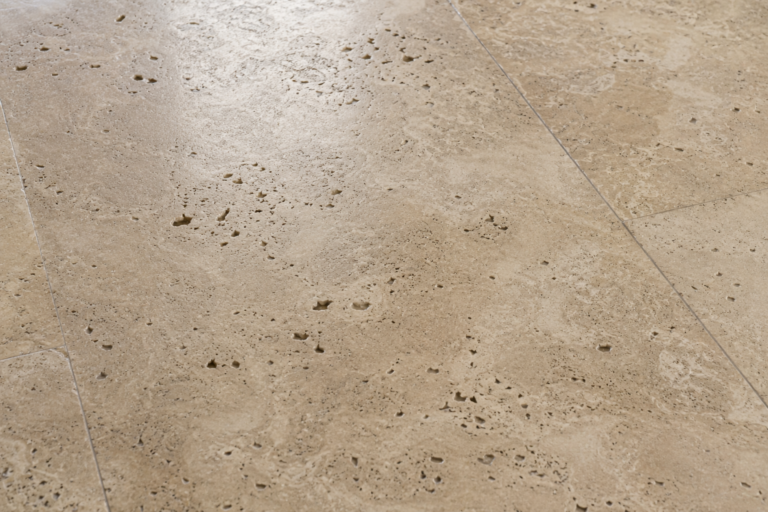
Travertine forms with natural holes and pits from gas bubbles trapped in mineral deposits — that texture is part of the stone’s character, not a defect, though many homeowners have them filled for a smoother look. Travertine is generally more forgiving than marble but still porous enough to need regular sealing. Explore our travertine cleaning and restoration services.
Limestone
Limestone is what much of the Texas Hill Country is built on, so it’s a natural fit for Austin homes — but that same sedimentary origin makes it soft and reactive to acid, similar to marble. Exterior limestone (patios, driveways) faces an added challenge: porosity that lets in moisture, which can lead to staining or even bacterial growth in humid conditions. Learn more about our limestone honing and polishing services or read how often limestone floors should be sealed in Austin.
Slate
Slate is dense and naturally water-resistant compared to other stones on this list, but it’s also highly porous in a different way — moisture can work into its layered structure, and exterior slate exposed to Austin’s sun and flash flooding can fade or wash out over time. It’s used both indoors and outside, which most other stones on this list aren’t. See our slate cleaning and sealing services.
Terrazzo
Terrazzo isn’t quarried stone at all — it’s a composite of marble, quartz, or glass chips set in a cement or epoxy base, then ground and polished smooth. It’s especially common in Austin’s mid-century homes and older commercial buildings. Terrazzo doesn’t etch the way marble does, but it does dull with foot traffic and old, yellowing wax coatings. Read our full terrazzo polishing guide or the terrazzo cleaning vs. restoration breakdown if you’re trying to figure out which one your floor needs.
What Damages Natural Stone in Austin Specifically
A few local conditions show up across nearly every stone type we restore:
Hard water leaves mineral deposits that build into haze on polished surfaces, especially marble and polished limestone.
Humidity accelerates sealant breakdown — a sealer that lasts 3-5 years in a dry climate may need attention sooner here, and can also contribute to efflorescence, where mineral salts migrate to the surface and create a chalky white residue.
UV and sun exposure fade and dry out exterior stone — slate patios, limestone entryways, and travertine pool decks all show this over time.
Flash flooding and water intrusion are a real risk for exterior stone near entries, patios, and low-lying areas, particularly for more porous stones like limestone and slate.
None of this means natural stone is high-maintenance — it means the maintenance needs to match the specific stone.
Cleaning, Sealing, and Restoration: Not the Same Service
Homeowners often assume “cleaning” covers everything, but each of these three services does something different:
Cleaning removes surface dirt, soap residue, and light staining. It won’t fix etching, restore lost shine from wear, or repair scratches.
Sealing doesn’t change the stone’s appearance — it slows down how much liquid the stone absorbs, buying you time to wipe up spills before they stain. Sealing does not prevent etching from acidic substances.
Restoration (honing and polishing) physically resurfaces the stone to remove scratches, etching, and wear, then brings back the shine. This is the only fix for damage that’s already happened.
A simple way to check where your floor stands: pour a small amount of water on it and wait 20–30 minutes. If it darkens the stone, your seal has worn through and it’s time to reseal. If the surface still looks dull or etched even when dry, cleaning and sealing won’t be enough — you’re likely looking at restoration.
If you’re specifically weighing whether an older, more damaged floor is worth restoring versus replacing entirely, we cover that decision in more detail in Can Natural Stone Floors Be Restored Without Replacing Them?
We Are Austin’s Complete Floor & Surface Care for Your Home
Beyond natural stone, we offer a full range of professional services to keep every surface in your home looking its best — from deep tile and grout cleaning and grout color sealing, to carpet cleaning, upholstery cleaning, and wood floor cleaning. For businesses, we also provide commercial stone floor restoration throughout the Austin metro area.
✨ Proof: Real Natural Stone Restoration Results in Austin
Every stone type on this list behaves differently, and the right process makes all the difference. Here’s a look at real natural stone projects we’ve completed across Austin.
For marble, this Marble Floor Polishing and Stone Restoration in Austin, TX project shows how a badly etched and worn marble floor was brought back through honing and polishing — no coatings, no shortcuts.
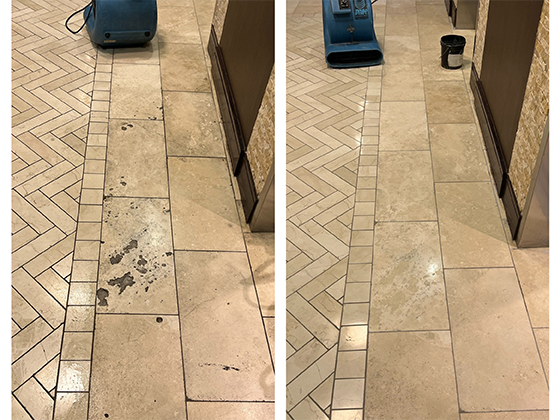
Travertine tells a cautionary tale in 10 Years of the Wrong Cleaner Nearly Ruined This Travertine Floor, a reminder of why stone-specific cleaning products matter as much as the cleaning itself.
For exterior slate, our Exterior Slate Tile Cleaning and Sealing in Austin, TX project restored a washed-out, sun-faded slate surface back to its natural color and sealed it against future weather exposure.
And for terrazzo, this restoration project shows how a dull, aging terrazzo floor was diamond-ground and polished back to a clean, reflective finish — no stripping or waxing required.
Whatever stone you’re working with, these results aren’t achievable with household cleaners or DIY kits. Professional evaluation and the right process make the difference.
Not sure which of these five stones you have, or what condition it’s really in? Santa Fe Floor Cleaning & Stone Care offers free evaluations throughout Austin, Round Rock, Cedar Park, Georgetown, Lakeway, Bee Cave, and West Lake Hills. Call 512-632-1621 or reach out online, and we’ll tell you honestly whether your floor needs a cleaning, a reseal, or a full restoration — no guesswork required.