
Porcelain vs ceramic tile is one of the first decisions Austin homeowners face when choosing new flooring — and it matters more for long-term cleaning and maintenance than most people realize. Both are popular, both look similar on a showroom floor, and both hold up well when installed correctly. But once tile is down and living through a few Central Texas summers, the differences between porcelain and ceramic start to show up in how easy — or difficult — they are to keep clean.
What Actually Separates Porcelain from Ceramic
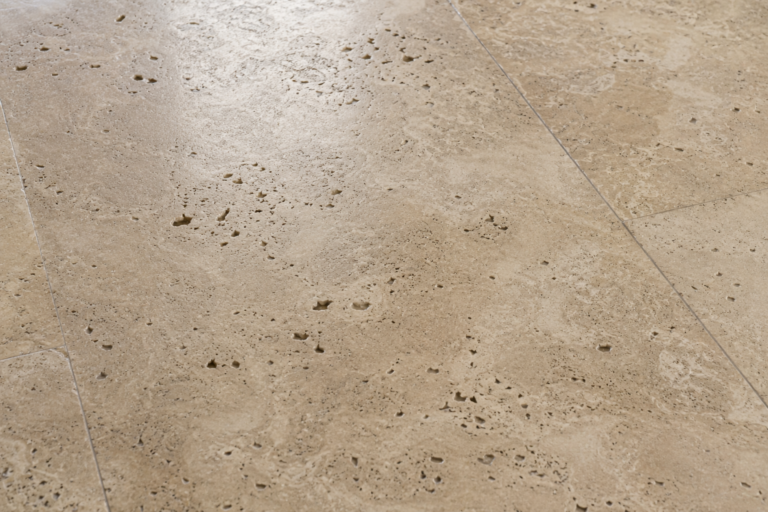
Porcelain and ceramic are both fired clay tiles, but porcelain is fired at a higher temperature and made from a denser, more refined clay. That density is the whole story when it comes to maintenance. The Tile Council of North America, the industry body that sets tile installation and material standards, classifies porcelain as having a water absorption rate of 0.5% or less — significantly lower than standard ceramic. Lower absorption means fewer places for moisture, dirt, and staining agents to penetrate the tile body itself.
Ceramic tile, by contrast, is more porous. It’s typically glazed on the surface for protection, but that glaze is thinner than what’s used on porcelain, and it’s more prone to chipping or wearing thin over years of foot traffic — which exposes the more absorbent tile underneath.
Which Is Easier to Clean Day-to-Day?
For routine cleaning, porcelain has a real edge. Its density means spills, grease, and everyday grime sit on the surface rather than soaking in, so a simple mop-and-clean routine tends to keep it looking good longer. Ceramic can still be a low-maintenance choice, but it typically needs more consistent attention to prevent staining from taking hold, especially in kitchens and entryways where spills and tracked-in dirt are common.
Neither material solves the grout problem, though. Grout is grout regardless of what tile sits on top of it, and it’s almost always more porous than either tile type. That’s why homes with beautiful, easy-care porcelain floors can still end up with dark, dingy-looking grout lines — the tile isn’t the issue, the grout between it is. We cover why that happens in our guide to grout residue buildup, and it applies just as much to porcelain installations as it does to ceramic ones.
Porcelain vs Ceramic Tile in Central Texas Conditions
Local conditions add another layer to the porcelain vs ceramic tile decision. Austin’s hard water leaves mineral deposits on any hard surface, and porcelain’s lower absorption makes it somewhat more resistant to those deposits soaking in and becoming stubborn stains. Ceramic, being more porous, can hold onto hard water spotting more persistently, particularly in bathrooms and around sinks.
Humidity is another factor. In poorly ventilated bathrooms or laundry rooms, moisture that gets into a more porous ceramic tile — or more likely, into the grout around it — creates the right environment for mold and mildew. Porcelain’s density doesn’t eliminate that risk in the grout lines, but it does reduce how much moisture the tile itself absorbs and holds.
Does Tile Choice Affect What Cleaning Products You Should Use?
Yes, and this is where a lot of homeowners get it wrong. Using the wrong cleaner on either tile type can dull the glaze, strip sealer, or leave residue behind. We go into this in depth in The Six Types of Cleaners Destroying Your Floors — the short version for porcelain vs ceramic tile specifically is that highly acidic or abrasive cleaners are risky on both, but ceramic’s thinner glaze has less margin for error.
When Professional Cleaning Makes Sense for Either Material
Whether you have porcelain or ceramic, professional hot water extraction reaches soil and staining that regular mopping can’t touch — particularly in the grout lines, which is usually where the real problem lives regardless of tile type. If you’re noticing dinginess that mopping won’t fix, it’s worth having the tile and grout professionally evaluated rather than assuming a tile replacement is the only fix.
Proof in Practice
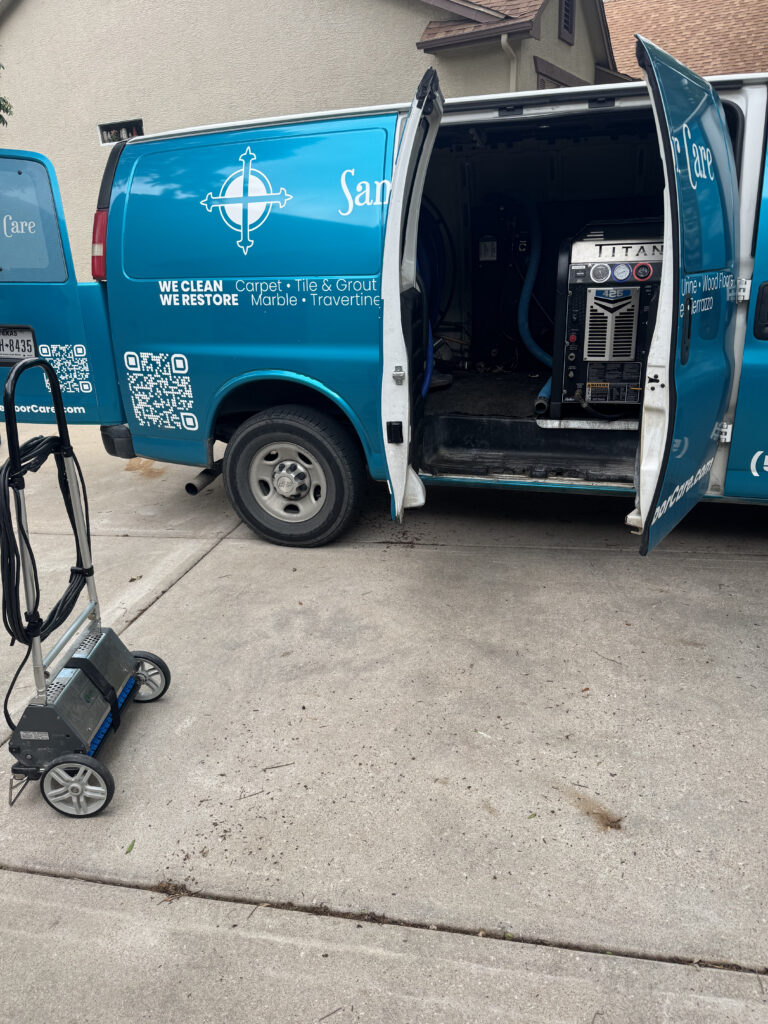
We recently completed a porcelain tile and grout restoration in a downtown Austin high-rise condominium, where years of built-up soil on the porcelain surface and surrounding grout lines were fully restored using professional hot water extraction — proof that even dense, low-maintenance porcelain still needs the occasional deep clean that mopping alone can’t provide.
We Are Austin’s Complete Floor and Surface Care for Your Home
Beyond tile and grout, we offer a full range of professional services to keep every surface in your home looking its best — from deep tile and grout cleaning and grout color sealing, to carpet cleaning, upholstery cleaning, and wood floor cleaning. For other natural stone, explore our marble, travertine, limestone, and terrazzo services.
Not Sure Which Tile You Have — Or How to Clean It Right?
Whether your home has porcelain, ceramic, or a mix of both, we can help you figure out the right care routine and handle the deep cleaning mopping can’t. Contact Santa Fe Floor Care for a free estimate and let’s get your floors looking the way they did on day one.