Many Austin homeowners unknowingly damage tile with wrong cleaner choices every day. What seems like a simple cleaning routine can turn into an expensive nightmare when harsh chemicals eat away at your beautiful tile and grout surfaces.
The truth is shocking: common household cleaners sitting in your pantry right now could be slowly destroying your floors. From acidic bathroom cleaners to bleach-based products, these seemingly harmless solutions can cause permanent etching, discoloration, and structural damage that costs thousands to repair.
Understanding which products to avoid and why they cause damage protects your investment and keeps your Austin home looking its best. Let’s explore the hidden dangers lurking in your cleaning cabinet and discover the safe alternatives that actually work.
Understanding Tile Damage from Cleaners: The Hidden Risks
Tile and Grout damage from cleaners is one of the most expensive mistakes homeowners make. This porous material acts like a sponge, absorbing whatever chemicals you apply to your floors. When you use the wrong products, those chemicals don’t just clean – they penetrate deep into the grout structure and begin breaking it down from the inside.
The Tile Council of North America warns that acidic and highly alkaline cleaners can lead to significant damage, especially on natural stone tiles. These products don’t just clean your surfaces; they actually react with the minerals in your tile and grout, causing irreversible chemical changes.
Most Austin homeowners don’t realize they’re causing damage until it’s too late. The deterioration happens gradually, starting with subtle color changes and progressing to crumbling grout lines that require complete replacement. What begins as an innocent cleaning session can end up costing thousands in professional restoration.
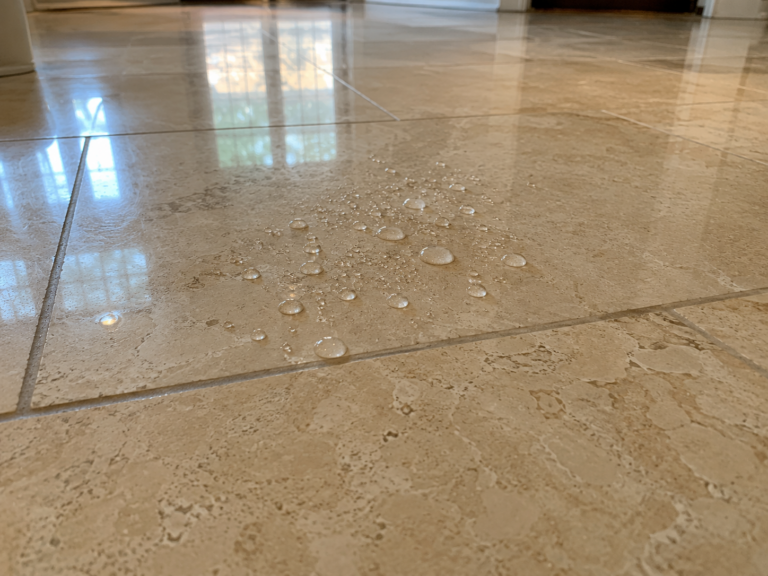
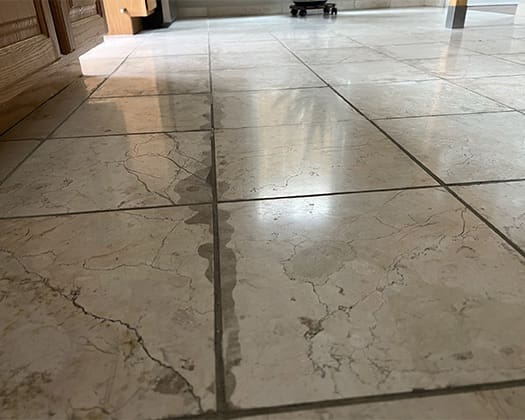
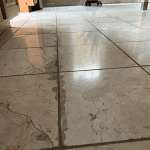
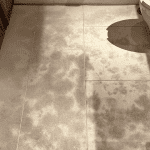
Below are two examples of what can happen when the wrong cleaner is used on natural stone tile. In both cases, the homeowner applied an over-the-counter acidic cleaner in an attempt to clean the grout and tile, but the low pH solution reacted with the calcium inside the natural stone. This chemical reaction permanently etched and damaged the stone’s finish, leaving the surface dull, rough, and uneven in appearance.
Can Cleaners Ruin Tile? The Shocking Truth About Common Products
The question “can cleaners ruin tile” has a definitive answer: absolutely yes. Your everyday cleaning products contain chemicals that can permanently damage different types of tile surfaces in ways you never imagined.
Natural stone tiles like marble, travertine, and limestone are particularly vulnerable. Acidic cleaners containing ingredients like vinegar, lemon juice, or commercial acids can etch these surfaces, creating dull spots that look like water stains but are actually permanent damage to the stone structure.
Even ceramic and porcelain tiles aren’t immune. The TCNA Handbook specifically advises against using products containing hydrochloric acid, phosphoric acid, or sodium hydroxide, as these can etch or dull tile surfaces. These chemicals are commonly found in toilet bowl cleaners, rust removers, and heavy-duty degreasers that many homeowners use on their floors.
Understanding how cleaners can cleaners ruin tile protects your investment and saves you from costly mistakes that insurance typically won’t cover.
The Most Common Tile Cleaner Mistakes Austin Homeowners Make
These tile cleaner mistakes cost Austin homeowners thousands in repairs every year. The most dangerous assumption is that stronger cleaners work better – a belief that leads to some of the most expensive flooring disasters we see.
Using Bleach on Grout Lines
Many homeowners reach for bleach to whiten dingy grout, not realizing this powerful chemical weakens the grout structure. The TCNA bathroom cleaning documentation specifically warns that products containing bleach should be avoided as they can weaken grout and discolor tiles. What starts as a whitening treatment often ends with crumbling grout that needs complete replacement.
Applying Acidic Cleaners to Natural Stone
Bathroom cleaners designed to remove soap scum and mineral deposits contain acids that dissolve natural stone. These products work by breaking down mineral deposits – but natural stone is made of minerals too. The result is permanent etching that looks like cloudy water spots but can’t be cleaned away.
Over-Scrubbing with Abrasive Tools
Combining harsh chemicals with aggressive scrubbing creates a double assault on your surfaces. Even if the chemical doesn’t damage your tile, the physical abrasion from steel wool or harsh brushes can scratch protective finishes and create microscopic grooves where dirt and bacteria accumulate.
Ignoring Manufacturer Instructions
The TCNA emphasizes the importance of following manufacturer instructions for both the tile and the cleaning products to ensure optimal results and to avoid warranty issues. Skipping this step often voids warranties and leads to damage that could have been prevented.
Types of Damage: What Happens When Things Go Wrong
The damage from wrong cleaning products manifests in several distinct ways, each requiring different – and expensive – repair approaches.
Grout Erosion and Crumbling
Chemical damage to grout starts as slight discoloration but progresses to actual erosion of the grout material. Strong acids and alkalis break down the cement binders that hold grout together, causing it to become powdery and eventually crumble away. This leaves gaps between tiles that allow water to penetrate to the subfloor, potentially causing structural damage.
Surface Etching on Natural Stone
Etching appears as dull, cloudy spots on polished stone surfaces. Unlike stains that sit on top of the surface, etching is actual damage to the stone structure itself. The acid literally dissolves microscopic amounts of the stone, creating rough areas that catch light differently than the surrounding polished surface.
Permanent Discoloration
Some chemical reactions create permanent color changes in both tile and grout. Bleach can cause colored grout to fade or turn white in patches, while certain acids can cause tiles to develop permanent yellow or brown stains. These color changes penetrate deep into the material and cannot be cleaned away.
Residue Buildup and Film Formation
Using the wrong dilution ratios or incompatible products can leave behind sticky residues that attract dirt and make your floors look worse than before cleaning. These films can be nearly impossible to remove and often require professional intervention to restore the original surface.
Why This Damage Happens: The Science Made Simple
Understanding why damage occurs helps you make better cleaning choices. The key factor is chemical compatibility – how the cleaning product interacts with your specific tile and grout materials.
pH Levels and Chemical Reactions
Every cleaning product has a pH level that determines how acidic or alkaline it is. The TCNA Handbook establishes pH-neutral cleaners as the recommended standard because they are less likely to damage the surface or finish of the tile. Products with very high or very low pH levels can cause chemical reactions that permanently alter your surfaces.
Porosity and Absorption
Grout is naturally porous, which means it absorbs liquids and chemicals. When you apply harsh cleaners, they don’t just sit on the surface – they soak deep into the grout structure. Once absorbed, these chemicals continue working long after you’ve finished cleaning, causing ongoing damage from the inside out.
Material Composition Matters
Different tile materials have different chemical compositions, which means they react differently to the same cleaning products. Natural stone contains calcium carbonate, which dissolves when exposed to acids. Ceramic tiles have different mineral compositions that may be more resistant to acids but vulnerable to strong alkalis.
What Should Be Used Instead: Industry-Approved Solutions
Professional cleaning starts with selecting the right products for your specific surfaces. The National Tile Contractors Association emphasizes using pH-neutral cleaners and avoiding acidic or abrasive products that can etch or discolor grout.
pH-Neutral Cleaners: The Gold Standard
Learning how to clean tile safely starts with understanding pH-neutral products. These cleaners effectively remove dirt and grime without causing chemical reactions that damage your surfaces. They work by using surfactants to lift dirt away from surfaces rather than dissolving or etching the materials themselves.
Proper Dilution Ratios
Even safe cleaners can cause problems when used at the wrong concentration. Always follow manufacturer instructions for dilution ratios, and remember that stronger isn’t better when it comes to tile cleaning. Concentrated products should be diluted exactly as specified to maintain their safety profile.
Testing Before Full Application
The TCNA advises testing any cleaning product on a small, inconspicuous area first to ensure compatibility with the tile surface. This simple step can save you thousands in repair costs by identifying potential problems before they affect visible areas.
Surface-Specific Products
Different tile materials require different cleaning approaches. For bathroom applications, the TCNA suggests mild detergent or vinegar-water solutions for routine cleaning, while natural stone requires specialized stone-safe cleaners that won’t react with calcium-based materials.
Professional Tile Cleaning Austin: The Safe Alternative
Professional tile cleaning Austin services use industry-approved methods that protect your investment while delivering superior results. Understanding the difference between professional and DIY approaches helps you make informed decisions about your floor care.
Correct Chemical Selection
Professional cleaners understand the chemical composition of different tile materials and select products accordingly. They use commercial-grade, pH-neutral cleaners specifically designed for tile and grout that aren’t available to consumers. These products are formulated to clean effectively without causing the chemical reactions that damage surfaces.
Surface-Specific Cleaning Methods
Professionals assess each surface individually and adjust their methods accordingly. Natural stone receives different treatment than ceramic tile, and sealed grout is handled differently than unsealed grout. This customized approach prevents damage while maximizing cleaning effectiveness.
Deep Cleaning and Extraction
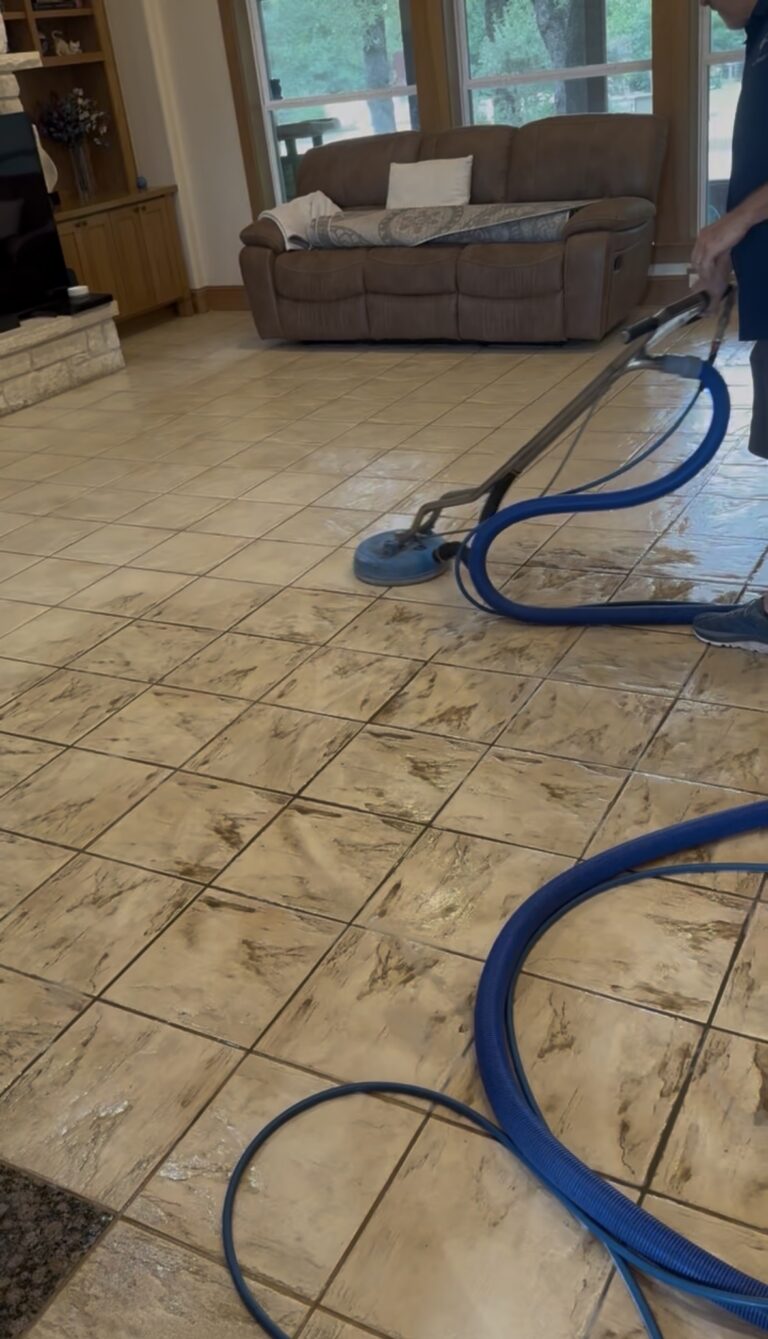
Professional equipment can remove embedded dirt and contaminants that household cleaners can’t touch. High-pressure extraction systems pull dirt and cleaning solutions out of porous grout, preventing the residue buildup that attracts future soil and creates ongoing maintenance problems.
Grout Protection and Sealing
The NTCA Reference Manual highlights the necessity of regular maintenance and sealing of grout to enhance its longevity and appearance. Professional services include grout sealing that creates a protective barrier against stains and moisture, extending the life of your installation and making future cleaning easier.
Protecting Your Austin Home’s Value
Your tile and grout represent a significant investment in your Austin home’s value and appearance. Preventing tile damage from wrong cleaning products protects this investment and saves you from expensive repairs that could have been avoided with proper care.
The industry consensus from TCNA, NTCA, and IMI is clear: regular maintenance with appropriate products prevents the need for harsh chemical interventions that risk surface damage. This preventive approach costs far less than restoration and keeps your floors looking beautiful for years to come.
When searching for tile cleaning Austin, choose certified professionals who understand industry standards and use approved methods. Santa Fe Floor Cleaning & Stone Care follows all TCNA and NTCA guidelines, using only pH-neutral, surface-safe products that clean effectively without causing damage.
Don’t let tile cleaner mistakes cost you thousands in repairs. Contact Santa Fe Floor Cleaning & Stone Care today for a free consultation and discover how professional cleaning protects your investment while delivering the deep clean your floors deserve. Our certified technicians use industry-approved methods that keep your tile and grout looking beautiful while extending their lifespan.
We Are Austin’s Complete Floor & Surface Care for Your Home
If you’re looking for more ways to protect and restore your floors, we offer a full range of professional services designed to keep every surface in your home looking its best. From deep tile and grout cleaning and long-lasting grout recoloring services, to advanced carpet cleaning and targeted pet urine treatment, we handle the toughest cleaning challenges with proven methods. We also provide detailed upholstery cleaning and gentle yet effective wood floor cleaning to refresh your entire living space.
For natural stone, our specialized stone restoration services cover everything from travertine cleaning, marble cleaning, and terrazzo services to limestone services and slate services. If your floors have lost their shine, our natural stone honing and polishing process can restore a smooth, like-new finish. Explore each service to learn more about how we can bring your floors back to life.
Ready to protect your floors? Call Santa Fe Floor Cleaning & Stone Care for your free quote and experience the difference professional expertise makes.